Explore climates.im

Orbit

Closest in January, farthest in July

Two official unit systems, one official conclusion: the seasons are not about how close Earth is to the Sun.
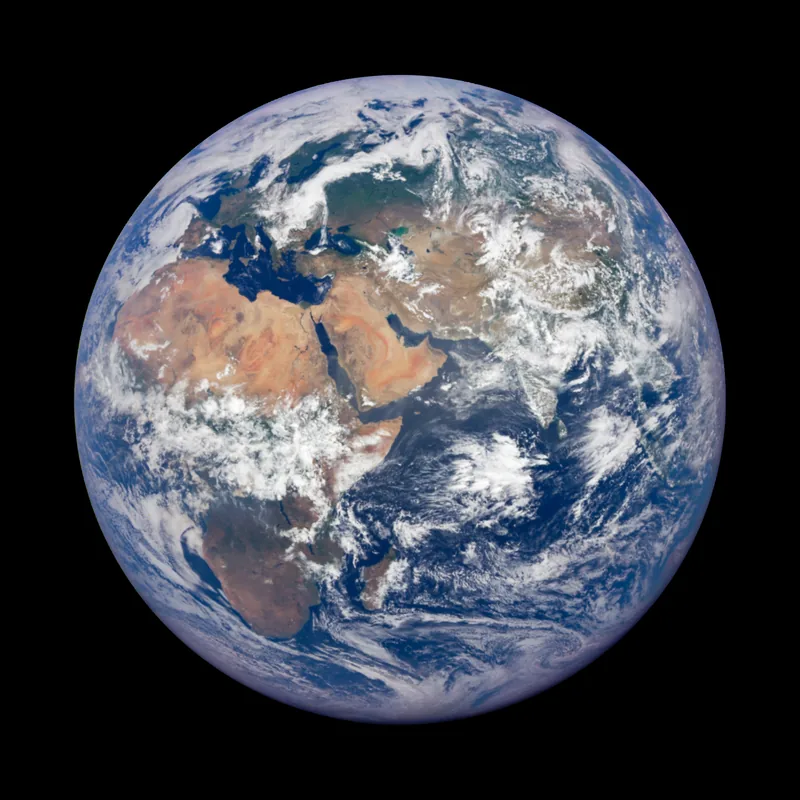
A true-colour DSCOVR EPIC view of Earth from more than a million kilometres away, 10 July 2025.
Earth as imaged by the EPIC instrument aboard the DSCOVR spacecraft more than a million kilometres away, 10 July 2025. NASA Space Place places aphelion in July; this July still is dated, and is not itself a measurement of aphelion. Satellite image: NASA / DSCOVR EPIC · Public domain · NASA / DSCOVR / Wikimedia Commons

Earth’s orbit is not a perfect circle, but the official pages are careful not to let that fact steal the cause of the seasons.

Kilometres, on the Fact Sheet

The NASA Earth Fact Sheet, last updated 15 November 2024, gives a semimajor axis of 149.598 × 10⁶ km, a perihelion of 147.095 × 10⁶ km and an aphelion of 152.100 × 10⁶ km. [source] The sidereal orbit is 365.256 days; the tropical orbit is 365.242 days.
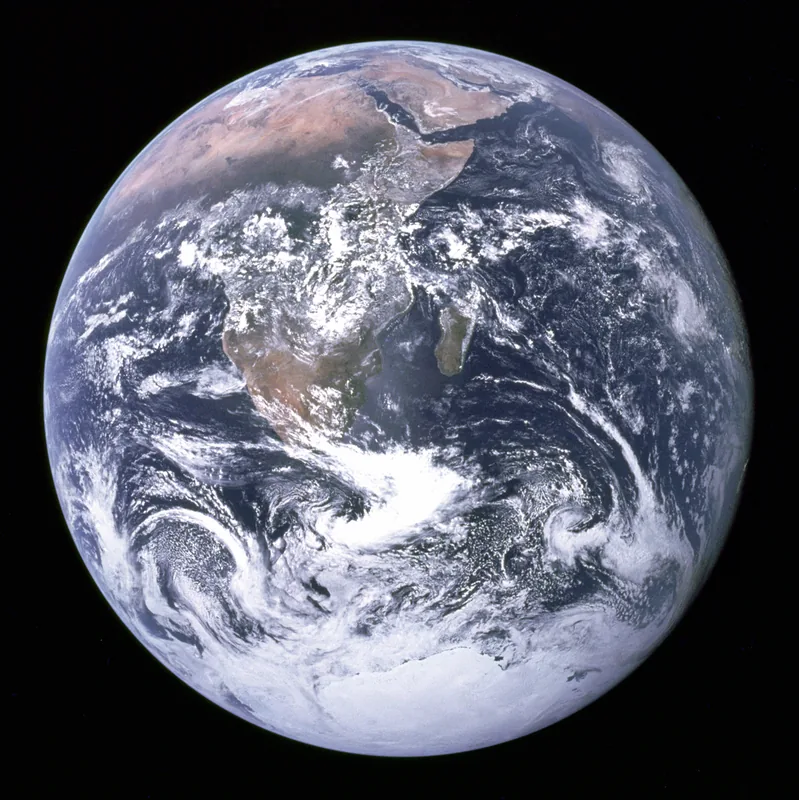
The Blue Marble: Earth seen from Apollo 17, with Africa, Antarctica and the Arabian Peninsula under daylight.
“The Blue Marble,” photographed on 7 December 1972 by the crew of Apollo 17, en route to the Moon, at a distance of about 29,400 kilometres (18,300 miles). The file description says it shows Africa, Antarctica and the Arabian Peninsula. Taken by either Harrison Schmitt or Ron Evans, in the wording of the file page. Spacecraft photograph: NASA / Apollo 17 crew (Harrison Schmitt or Ron Evans) · Public domain · NASA / Apollo 17 / Wikimedia Commons

Miles, on Space Place

NASA Space Place gives perihelion as 91,400,000 miles, in January, and aphelion as 94,500,000 miles, in July. The difference is “over 3 million miles,” small relative to the distance. [source] Those miles are not converted into the Fact Sheet’s kilometres and called official.

Winter at the closest point

“The Northern Hemisphere has winter when Earth is closest to the Sun and summer when farthest.” [source] “That just goes to prove that Earth's distance from the Sun is not the cause of the seasons.” The tilt — 23.4 degrees on Facts About Earth — is. [source]
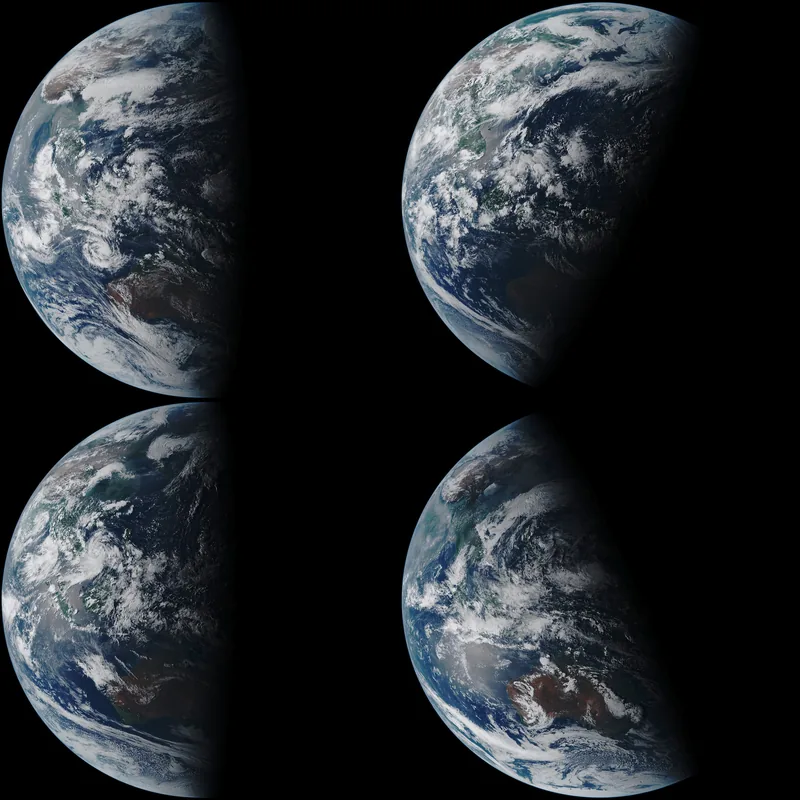
A four-panel composite of Earth at the 2021–2022 equinoxes and solstices, all taken at 08:00 UTC by Himawari-8.
A Himawari-8 composite, dated 15 September 2022 on the file page, used under CC BY 4.0. The file description: Japan’s Himawari-8 geostationary satellite captured the illumination of Earth at each change of astronomical season throughout 2021 and 2022. The March equinox is upper left, the June solstice upper right, the September equinox lower left, and the December solstice lower right; the images were all taken at 08:00 UTC on the days of the equinoxes and solstices. Satellite composite: Japan Meteorological Agency, Himawari-8 AHI, via Digital Typhoon · CC BY 4.0 · Japan Meteorological Agency / Himawari-8 / Digital Typhoon / Wikimedia Commons

Orbital cycles that stretch over tens of thousands of years, and how they relate to ice ages, are on ice-ages.climates.im.

Keep the lights on

Enjoyed a desk of official tilts, unblended figures, and a few seasonal stills?

No pop-ups. No intrusive advertising. Just interesting stuff. A little support helps the next climates.im site get built.