Explore climates.im

Why seasons

Why we have seasons

Three official NASA tilt figures, a winter at perihelion, and a Met Office word for the day when day and night are exactly equal.

A desk of official wordings for why we have seasons
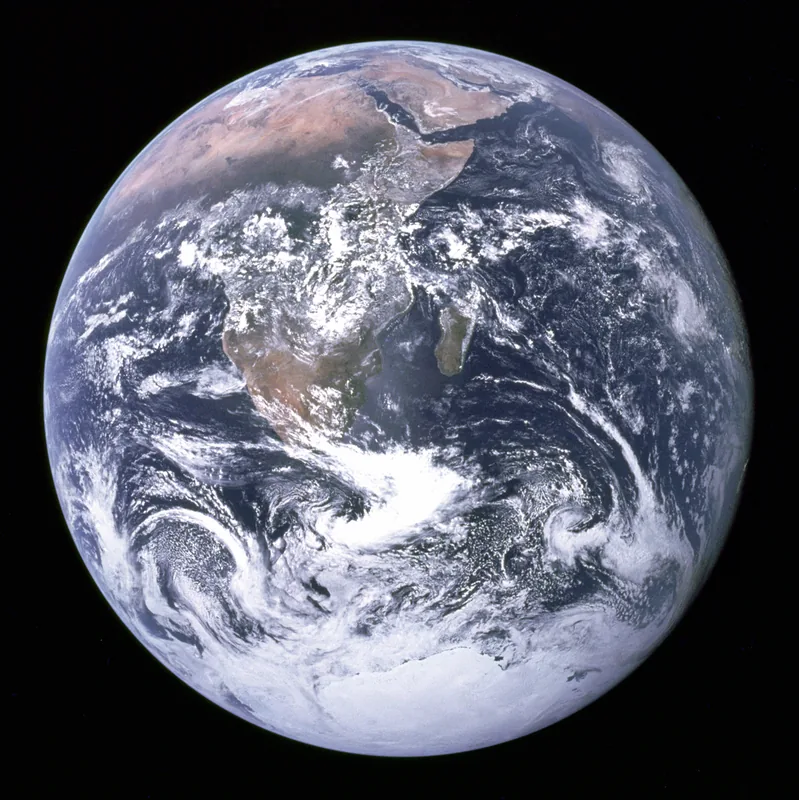
The Blue Marble: Earth seen from Apollo 17, with Africa, Antarctica and the Arabian Peninsula under daylight.
“The Blue Marble,” photographed on 7 December 1972 by the crew of Apollo 17, en route to the Moon, at a distance of about 29,400 kilometres (18,300 miles). The file description says it shows Africa, Antarctica and the Arabian Peninsula. Taken by either Harrison Schmitt or Ron Evans, in the wording of the file page. Spacecraft photograph: NASA / Apollo 17 crew (Harrison Schmitt or Ron Evans) · Public domain · NASA / Apollo 17 / Wikimedia Commons

The default card quotes NASA’s Facts About Earth page in full on the tilt: 23.4 degrees, and “this tilt causes our yearly cycle of seasons.” [source] The Fact Sheet card keeps 23.44°, the kilometres of perihelion and aphelion, and the sidereal and tropical year, last updated 15 November 2024. [source] Space Place keeps its miles, and the sentence that distance is not the cause. [source]
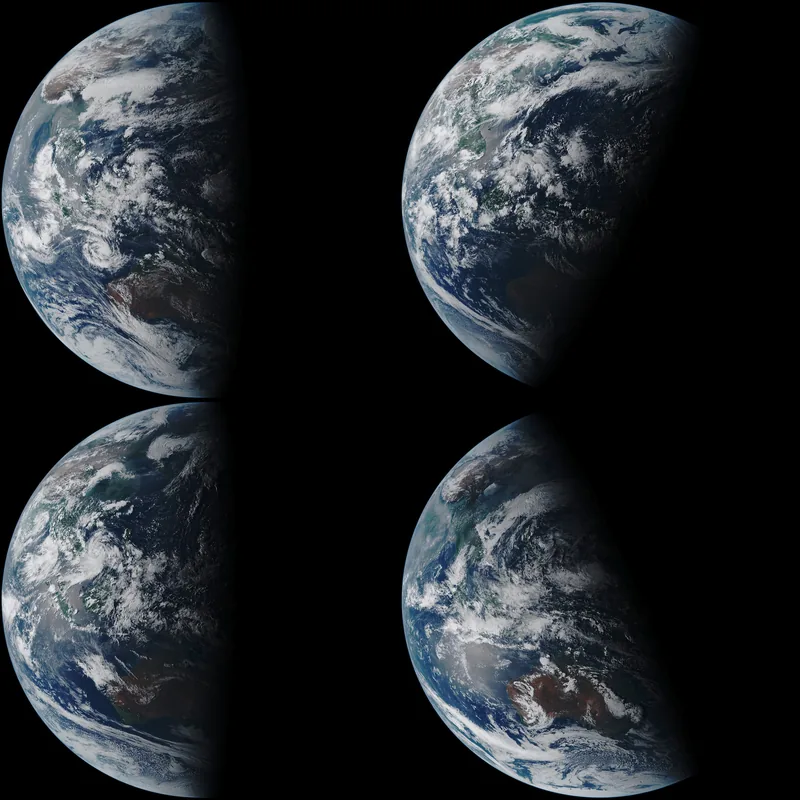
A four-panel composite of Earth at the 2021–2022 equinoxes and solstices, all taken at 08:00 UTC by Himawari-8.
A Himawari-8 composite, dated 15 September 2022 on the file page, used under CC BY 4.0. The file description: Japan’s Himawari-8 geostationary satellite captured the illumination of Earth at each change of astronomical season throughout 2021 and 2022. The March equinox is upper left, the June solstice upper right, the September equinox lower left, and the December solstice lower right; the images were all taken at 08:00 UTC on the days of the equinoxes and solstices. Satellite composite: Japan Meteorological Agency, Himawari-8 AHI, via Digital Typhoon · CC BY 4.0 · Japan Meteorological Agency / Himawari-8 / Digital Typhoon / Wikimedia Commons

A Himawari-8 composite on this page shows Earth at each change of astronomical season in 2021 and 2022, all at 08:00 UTC. It is a licensed still, not a substitute for those official sentences. A NASA Helio page that compares Earth’s tilt with Mars is opened in the field notes, but one sentence on that page is an apparent typo and is not used as the explanation. [source]

Longer orbital cycles — eccentricity, obliquity and precession over tens of thousands of years — belong on ice-ages.climates.im. This desk is the yearly tilt.

Keep the lights on

Enjoyed a desk of official tilts, unblended figures, and a few seasonal stills?

No pop-ups. No intrusive advertising. Just interesting stuff. A little support helps the next climates.im site get built.