Ancient calendars
Stones that watch the Sun
Long before anyone wrote down a calendar, people in these islands built monuments that catch the Sun on the longest or shortest day. Three of them still work.
Stonehenge: built to the solstice line
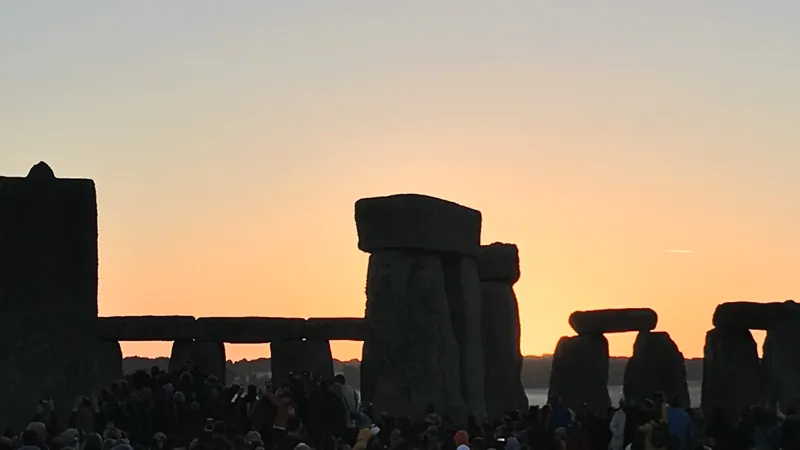
English Heritage, which looks after Stonehenge, says plainly that it “was built to align with the sun on the solstices.” On the summer solstice the sun rises behind the Heel Stone in the north-east part of the horizon, and its first rays shine into the heart of the monument. On the winter solstice the sun sets to the south-west of the stone circle. [English Heritage]
It was not built in one go. English Heritage says the first monument was an early henge built about 5,000 years ago, and the stone circle went up in the late Neolithic period, about 2500 BC. [English Heritage] Two kinds of stone were used, the larger sarsens and the smaller “bluestones.” The sarsens stand in two arrangements, an inner horseshoe and an outer circle, with the bluestones set between them in a double arc. [English Heritage] About 200 or 300 years later the central bluestones were rearranged, and the earthwork Avenue was built, connecting Stonehenge with the River Avon. [English Heritage]
It was also a cemetery. Around 64 cremations have been found, and perhaps as many as 150 people were originally buried there, which English Heritage says makes it “the largest late Neolithic cemetery in the British Isles.” [English Heritage] Four of the sarsens carry hundreds of carvings of axe-heads and a few daggers. [English Heritage]
People still come for the Sun. The Royal Meteorological Society’s review of 2022 noted that thousands gathered to celebrate the summer solstice at Stonehenge that year, for the first time since 2019. [Royal Meteorological Society]
Newgrange: a beam through the roof-box
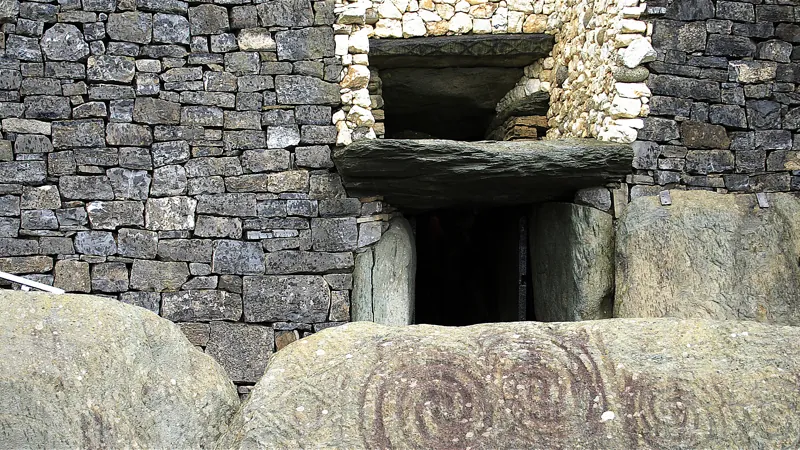
Newgrange, in County Meath, is one of 40 passage tombs in Brú na Bóinne, which Heritage Ireland translates as “the Palace or Mansion on the Boyne.” [Heritage Ireland] At sunrise on the winter solstice mornings, 18 to 22 December each year, a beam of sunlight enters through the roof-box and travels up to 19 metres (62 ft) along the passage, lighting the chamber. After 17 minutes it fades back down the passage. [Heritage Ireland]
The clever part is where the light comes in. Ireland’s Office of Public Works says direct sunlight enters “not through the doorway, but through the specially contrived small opening above the entrance known as the ‘roof box’.” [Office of Public Works] A 2024 research report for World Heritage Ireland found that, with the doorway blocked as it probably was in the Neolithic, direct sunlight can only reach the burial chamber through that roof-box. [World Heritage Ireland]
The same report found that the roof-box may once have been opened and closed. A single quartz block was found in place in the roof-box, and scratch marks across the roof-stone suggest that three such quartz blocks could have sealed it. [World Heritage Ireland] The report notes that the Irish word for quartz, grianchloch, is made of grian, meaning Sun, and chloch, meaning stone. [World Heritage Ireland]
The beam is not quite where it used to be. The report says the Earth’s tilt in the Neolithic was 24.1 degrees, compared with 23.4 today, enough to move the solstice sunrise by about two widths of the Sun. Direct light, which now reaches only the rear edge of the chamber, could then have reached the back stone of the end recess. [World Heritage Ireland] It also finds that, today, direct sunlight can enter the chamber on dates about 20 days either side of 21 December. [World Heritage Ireland]
The man who saw it first, and the lottery
The modern rediscovery belongs to Professor O’Kelly, who excavated and restored the monument. The research report says he visited the chamber on the winter solstice of 1967 to check, and documented it on 21 December 1969. [World Heritage Ireland] In his own words, quoted in the report, at exactly 8.54 GMT the top edge of the sun appeared, and at 8.58 “the first pencil of direct sunlight shone through the roofbox.” [World Heritage Ireland]
Today a place inside is won by lottery. For 2026 the draw took place on 15 October at the Brú na Bóinne Visitor Centre, from 34,263 online entries, and 38 winners, each with a guest, will be inside the chamber at dawn during the solstice period. [Heritage Ireland] Everyone else can watch the livestream on 21 December. [Heritage Ireland]
Maeshowe: the winter sunset in Orkney
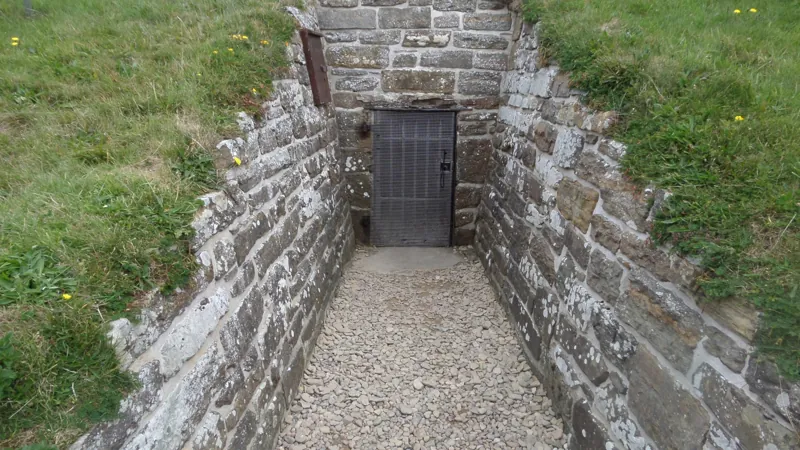
Maeshowe, a chambered cairn on Orkney, was built around 5,000 years ago and is described by Historic Environment Scotland as “a masterpiece of Neolithic design and construction.” It sits on a platform circled by a ditch and is part of the Heart of Neolithic Orkney World Heritage Site. [Historic Environment Scotland]
Where Newgrange catches the sunrise, Maeshowe catches the sunset. For the three weeks before and after the winter solstice, the light of the setting sun shines straight down its gently sloping passage and lights up the back of the central chamber. [Historic Environment Scotland]
Three dates for the same light: Heritage Ireland gives 18–22 December for the Newgrange solstice mornings, the research report finds direct light about 20 days either side of 21 December, and Historic Environment Scotland gives three weeks either side for Maeshowe. [Heritage Ireland] [World Heritage Ireland] [Historic Environment Scotland] These are different monuments and different ways of counting, so the numbers are given as each source states them.
Why build a calendar in stone?
Nobody left a note. English Heritage invites visitors to find out “why our ancestors might have built this extraordinary monument” and says its stones “have silently marked the winter solstice for thousands of years”, without claiming a single answer. [English Heritage] What all three sites share is the turning point of the year: the shortest day, after which the light begins to come back. For how the solstice itself works, see equinoxes, solstices and equilux.
Enjoyed a desk of official tilts, unblended figures, and a few seasonal stills?
No pop-ups. No intrusive advertising. Just interesting stuff. A little support helps the next climates.im site get built.